
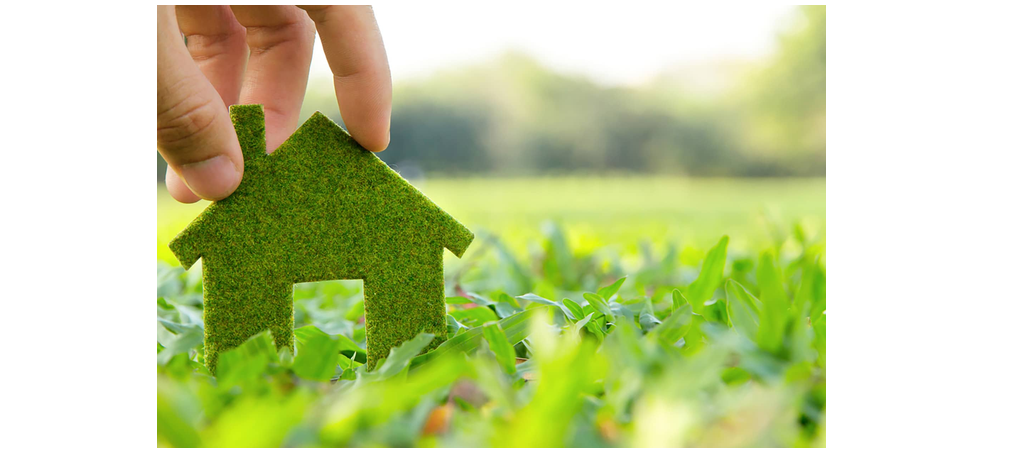
Have you ever wondered how much money you could save if your home used less electricity, collected rainwater and reduced water wastage?
Today, homebuyers in India are becoming more interested in homes that are not only comfortable but also environmentally friendly. These homes are commonly known as Green Homes or Sustainable Homes.
A green home is designed and constructed to use natural resources efficiently. It focuses on reducing electricity consumption, saving water, using eco-friendly construction materials and creating a healthier living environment.
With rising electricity bills, water shortages and growing environmental concerns, sustainable housing is becoming an important part of India's real estate sector.
But an important question remains: Are green homes in India really worth the additional investment?
Let's understand what green homes are, their key features, benefits, costs and whether buying a sustainable house is a good long-term investment.
1. What Is a Green Home?
A green home is a residential property designed to reduce its impact on the environment while providing a comfortable and healthy living space.
Unlike conventional houses, green homes are planned to use electricity, water and construction materials more efficiently.
Some common features of a green home include:
- Solar panels for generating electricity.
- Rainwater harvesting systems to collect and store rainwater.
- Energy-efficient lighting and electrical appliances.
- Proper ventilation and natural lighting.
- Eco-friendly and sustainable construction materials.
- Waste management and recycling systems.
- Water-efficient taps and bathroom fittings.
- Green spaces, gardens and trees around the property.
Simple Example:
Imagine two houses of similar size.
- House A uses regular electrical appliances, has no rainwater harvesting system and depends completely on electricity from the grid.
- House B uses rooftop solar panels, LED lights, energy-efficient appliances and a rainwater harvesting system.
House B may require a higher initial investment, but it can reduce monthly electricity and water expenses over time.
This is one of the main reasons why green homes are attracting homebuyers in India.
2. Important Features of Green Homes in India
Green homes are not necessarily expensive or complicated buildings. Even simple design choices can make a house more sustainable.
Let's look at some of the important features of sustainable houses in India.
2.1 Solar Panels – Generate Your Own Electricity
Solar panels are one of the most popular features of green homes.
They are installed on rooftops to convert sunlight into electricity. Since India receives plenty of sunlight throughout the year, rooftop solar systems can be a useful option for many residential properties.
Benefits of installing solar panels:
- Reduces dependence on electricity supplied by the local electricity board.
- Helps reduce monthly electricity bills.
- Uses renewable energy from sunlight.
- Can increase the long-term value and attractiveness of a property.
- Reduces dependence on conventional energy sources.
Example:
Suppose a family spends ₹3,000 every month on electricity. Installing a suitable rooftop solar system may help reduce this expense, depending on electricity consumption, system capacity, sunlight availability and local electricity regulations.
However, solar panels require an initial investment. Homeowners should also consider installation costs, inverter replacement, maintenance and available rooftop space.
Government Support for Solar Panels in India
The Government of India introduced the PM Surya Ghar: Muft Bijli Yojana to encourage residential rooftop solar installations.
Eligible households can receive Central Financial Assistance (CFA) for rooftop solar installations, subject to the scheme's applicable conditions. Homeowners can check eligibility and current subsidy details through the official government portal.
Official website: PM Surya Ghar Scheme.
2.2 Rainwater Harvesting – Save Water for the Future
Water conservation is another important feature of an eco-friendly house.
Many Indian cities experience water shortages, especially during summer. Rainwater harvesting helps homeowners collect and store rainwater instead of allowing it to flow away unused.
How does rainwater harvesting work?
- Rainwater falls on the rooftop.
- Pipes collect the rainwater and direct it towards a filtration system.
- The filtered water is stored in a tank or directed into a groundwater recharge pit.
- Stored water can be used for gardening, cleaning and other suitable purposes.
- Recharge systems help replenish groundwater, where local soil and groundwater conditions permit.
Benefits of rainwater harvesting:
- Reduces dependence on municipal water supply and water tankers.
- Helps conserve groundwater.
- Provides an additional source of water for household activities.
- Reduces rainwater runoff around the property.
- Can reduce long-term water expenses.
Example:
A house with rooftop rainwater harvesting can collect rainwater during the monsoon season and use the stored water for gardening, washing outdoor areas and other non-drinking purposes.
For drinking and cooking, rainwater requires appropriate treatment and regular quality testing.
2.3 Energy Efficiency – Reduce Electricity Consumption
An energy-efficient home is designed to provide maximum comfort while consuming less electricity.
In India, electricity consumption can increase significantly due to air conditioners, refrigerators, water heaters, lighting and other household appliances.
Green homes address this problem through better planning and energy-efficient technology.
Important energy-saving features include:
- LED lighting instead of traditional bulbs.
- Energy-efficient air conditioners and refrigerators.
- Large windows to allow natural daylight.
- Cross ventilation to improve natural airflow.
- Proper roof insulation to reduce indoor heat.
- Solar water heaters.
- Smart electricity monitoring systems.
Why is this important in India?
In cities such as Chennai, Coimbatore, Bengaluru and Hyderabad, households often use air conditioners and fans for several months of the year.
A home designed with proper ventilation, suitable window placement, shaded balconies and heat-resistant roofing can reduce the need for excessive cooling.
This can help reduce electricity consumption and improve indoor comfort.
2.4 Eco-Friendly Construction Materials – Build Responsibly
Construction materials play an important role in making a house environmentally friendly.
Traditional construction methods can consume significant amounts of natural resources. Green construction focuses on using materials that reduce environmental impact without compromising the strength and safety of the building.
Examples of eco-friendly construction materials:
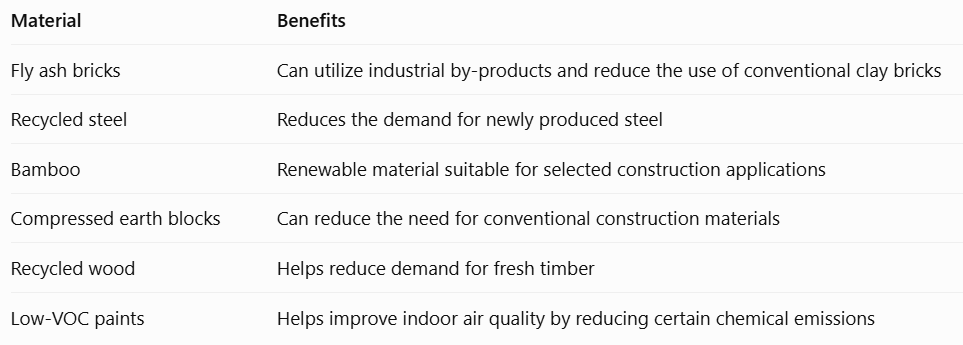
Homebuyers should remember that not every alternative material is suitable for every location or building design. Materials should meet applicable building standards and be approved by qualified professionals.
2.5 Waste Management and Green Spaces
A sustainable home should also focus on reducing household waste and improving the surrounding environment.
Some useful features include:
- Separate bins for wet and dry waste.
- Composting facilities for kitchen waste.
- Recycling facilities.
- Trees and gardens around the property.
- Green rooftops where structurally suitable.
- Landscaped areas that use water-efficient plants.
These features can make residential communities cleaner, healthier and more comfortable.
3. What Are the Benefits of Buying a Green Home in India?
Buying a sustainable house can offer several advantages beyond simply protecting the environment.
Let's understand the major benefits.
1. Lower Monthly Electricity Bills
Solar panels, LED lights, natural ventilation and energy-efficient appliances can reduce electricity consumption.
Over several years, these savings may help compensate for some of the additional investment made in sustainable features.
2. Reduced Water Expenses
Rainwater harvesting, water-efficient taps and dual-flush toilets can help reduce water consumption.
This is particularly useful in areas where residents depend on private water tankers.
3. Healthier Living Environment
Green homes can provide better natural lighting, improved ventilation and better indoor environmental quality when properly designed.
This can make everyday living more comfortable.
4. Better Long-Term Property Appeal
As awareness of sustainability increases, some homebuyers may prefer properties with solar power, water conservation facilities and energy-efficient designs.
Such features can make a property more attractive to future buyers or tenants. However, a higher resale price is not guaranteed.
5. Reduced Environmental Impact
Green homes can reduce electricity consumption, conserve water and encourage responsible use of construction materials.
6. Better Preparedness for Resource Shortages
A house with solar power and rainwater harvesting may be better prepared for certain electricity and water supply disruptions, depending on its storage and backup arrangements.
4. Are Green Homes More Expensive Than Regular Homes?
This is one of the most common questions among homebuyers.
Generally, a green home may cost more initially than a conventional house, depending on the technology, construction materials and sustainable features included.
However, not every green home is expensive. Some features, such as natural ventilation, LED lighting and efficient window placement, can be included during the design stage without significantly increasing construction costs.
Here is a simple comparison:
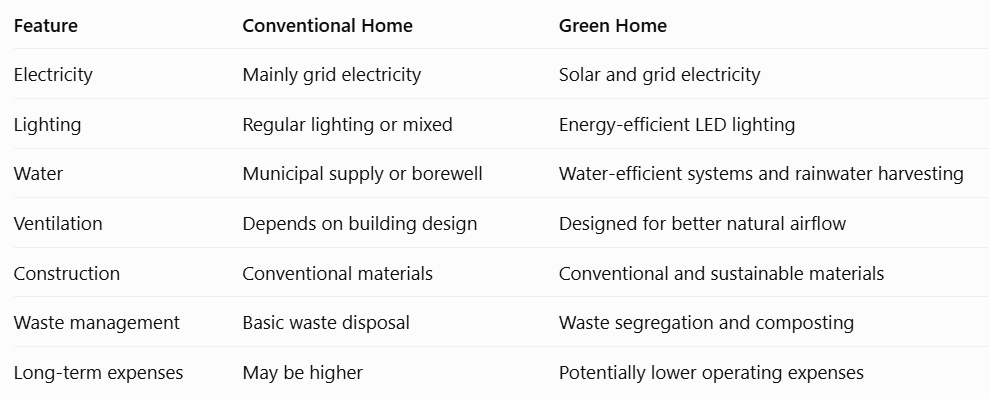
Important: The actual cost difference depends on the property size, location, construction quality and selected green technologies. Buyers should compare the total cost of ownership rather than looking only at the purchase price.
5. Green Building Certifications in India
How can a homebuyer identify whether a residential property genuinely follows sustainable construction practices?
One way is to check whether the project has received a recognised green building certification.
In India, some well-known green building rating systems include:
5.1 IGBC – Indian Green Building Council
The Indian Green Building Council (IGBC) provides green building rating systems for residential properties and other building categories.
The IGBC Green Homes rating system evaluates factors such as:
- Energy efficiency.
- Water conservation.
- Sustainable construction materials.
- Waste management.
- Indoor environmental quality.
- Site selection and planning.
IGBC also provides different certification levels, including Certified, Silver, Gold and Platinum, based on the applicable rating criteria.
Official website: IGBC Green Homes Rating System.
5.2 GRIHA – Green Rating for Integrated Habitat Assessment
GRIHA is another recognised green building rating system in India.
It assesses buildings based on environmental performance, including energy use, water conservation, waste management and sustainable construction practices.
Official website: GRIHA Official Website.
Homebuyer's Tip: Before purchasing a property advertised as a green home, ask the builder for the actual certification, rating level and supporting documents. Do not assume that a project is certified simply because its brochure mentions eco-friendly features.
6. Are Green Homes Worth the Investment? A Simple Cost-Benefit Example
Let's consider a simple example to understand whether investing in a sustainable house can be financially beneficial.
Suppose you are purchasing a residential property and decide to include additional green features.
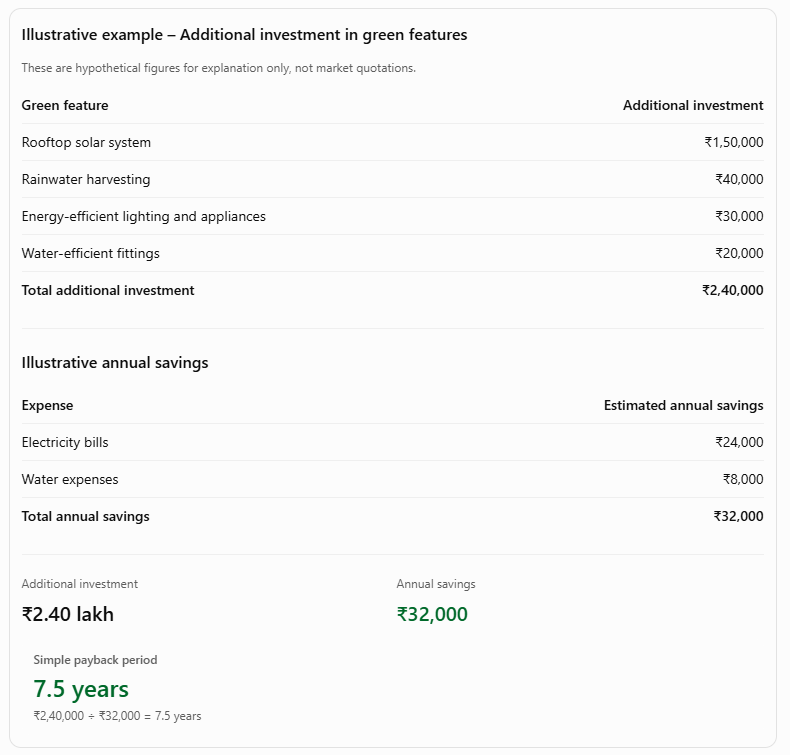
Based on this example, the additional investment could be recovered through estimated utility savings in approximately 7.5 years.
However, this is a simple payback calculation. It does not include maintenance, financing costs, equipment replacement, inflation, electricity tariff changes or the time value of money.
Actual savings will depend on household consumption, local electricity tariffs, water availability, solar generation and maintenance costs.
The important point: Green homes can be financially beneficial over the long term, particularly for families planning to stay in the property for many years.
7. What Should Homebuyers Check Before Buying a Green Home?
Before purchasing an eco-friendly residential property in India, consider the following checklist.
Green Home Buying Checklist
- Check whether the property has rooftop solar panels or solar installation provisions.
- Verify whether rainwater harvesting facilities are functional.
- Check the quality of ventilation and natural lighting.
- Ask about energy-efficient electrical systems and appliances.
- Verify the quality and safety of eco-friendly construction materials.
- Check whether the project has IGBC or GRIHA certification, if advertised.
- Understand the maintenance costs of solar and water systems.
- Check water storage, filtration and waste management facilities.
- Review the builder's approvals and applicable building permissions.
- Compare the property price with similar conventional homes in the same location.
These checks can help you avoid purchasing a property that is marketed as environmentally friendly but does not provide practical sustainability benefits.
8. Challenges of Buying a Green Home in India
Although sustainable housing offers several benefits, homebuyers should also understand some challenges.
1. Higher Initial Investment
Some green technologies, such as solar panels, advanced insulation and specialised construction materials, may increase the initial construction or purchase cost.
2. Maintenance Requirements
Solar panels, rainwater filters, water storage systems and other installations require periodic inspection and maintenance.
3. Limited Availability
Not every city or residential developer offers genuinely sustainable housing projects.
4. Lack of Awareness
Some homebuyers are unfamiliar with green building features and may find it difficult to compare different properties.
5. Location-Specific Requirements
A rainwater harvesting system, solar installation or particular construction material may not provide the same benefits in every location. Climate, rainfall, building orientation and local regulations matter.
Therefore, homebuyers should evaluate the practical benefits of each feature instead of purchasing a property simply because it is advertised as a green home.
9. What Is the Future of Green Homes in India?
The future of sustainable housing in India looks promising as homebuyers, builders and policymakers increasingly focus on energy efficiency and environmental protection.
Several factors may support the growth of green residential buildings:
- Growing awareness of climate change and environmental protection.
- Increasing electricity and water consumption in urban areas.
- Greater adoption of rooftop solar systems.
- Demand for energy-efficient apartments and independent houses.
- Improved availability of sustainable construction materials.
- Growing interest in certified green buildings.
Government initiatives such as PM Surya Ghar are also encouraging households to explore renewable energy solutions.
In the coming years, sustainable features may become increasingly common in residential projects, particularly in cities experiencing high temperatures, water shortages and growing electricity demand.
For real estate developers, incorporating green features during the planning and construction stages may also help differentiate their projects in a competitive property market.
10. Final Verdict: Should You Invest in a Green Home?
So, are green homes in India worth the investment?
Yes, green homes can be a worthwhile long-term investment, especially for homebuyers who value lower operating expenses, water conservation, energy efficiency and a healthier living environment.
However, the decision should depend on your budget, property location, construction quality and the actual benefits offered by the sustainable features.
Here are some situations where buying a green home may be a good decision:
- For families: Lower electricity and water consumption can help reduce regular household expenses.
- For long-term homeowners: Savings from sustainable features may become more meaningful over several years.
- For environmentally conscious buyers: Green homes help reduce the environmental impact of everyday living.
- For property investors: Sustainable features may improve a property's appeal to certain tenants and future buyers.
You do not necessarily need to purchase an expensive green-certified property to enjoy these benefits. Even a conventional house can become more sustainable by installing solar panels, adopting rainwater harvesting and improving energy efficiency.
The best approach is to choose a home that offers a good balance between purchase price, construction quality, location, comfort and long-term savings.
A green home is not just about saving electricity or water. It is about creating a comfortable home today while protecting natural resources for future generations.
Frequently Asked Questions (FAQs)
1. What is a green home in India?
A green home is a residential property designed to reduce energy and water consumption through features such as solar panels, rainwater harvesting, energy-efficient appliances, natural ventilation and eco-friendly construction materials.
2. Are green homes more expensive than normal homes?
Green homes may have higher initial costs depending on the features included. However, they can potentially reduce monthly electricity and water expenses over time.
3. Is installing solar panels worth it for residential homes in India?
Yes, rooftop solar panels can be beneficial for households with suitable rooftop space and regular electricity consumption. The financial benefits depend on installation costs, sunlight availability, electricity tariffs and applicable government subsidies.
4. What is the purpose of rainwater harvesting in residential buildings?
Rainwater harvesting collects and stores rainwater for suitable household uses or groundwater recharge. It helps conserve water and reduce dependence on external water supplies.
5. What are the best eco-friendly construction materials for houses in India?
Some commonly considered options include fly ash bricks, compressed earth blocks, bamboo, recycled steel, recycled wood and low-VOC paints. Their suitability depends on the building design and local conditions.
6. How can I identify a certified green home in India?
Check whether the residential project has a recognised certification, such as IGBC or GRIHA. Ask the builder for the certificate and verify its validity and rating details.
7. Do green homes have better resale value?
Green features may improve a property's attractiveness to environmentally conscious buyers. However, resale value depends on several factors, including location, demand, property condition and purchase price.
Disclaimer
This article is intended for general educational and informational purposes only. The costs, savings and benefits discussed are illustrative and may vary depending on location, construction quality, technology and usage. Homebuyers should independently verify property details, certifications, government subsidies and applicable regulations before making any real estate investment decision.