
Buying a home is one of the biggest financial decisions in a person's life. For many people, it is not just about purchasing a property; it is about fulfilling a dream, creating a secure future for their family, and making a long-term investment.
However, buying a property can sometimes feel confusing, especially for first-time homebuyers. Questions about property documents, home loans, registration charges, RERA approval, legal verification, and hidden costs are common.
Before purchasing a property, it is important to understand the process and make informed decisions.
In this article, we have covered the top 10 frequently asked questions (FAQs) every homebuyer should know before purchasing a property in India. These simple explanations will help you understand the home-buying process and avoid common mistakes.
1. What are the important things to check before buying a property?
Before purchasing a property, you should check more than just its price and appearance. It is important to verify the property's legal status, location, construction quality, and essential facilities.
Here are some important things to check:
- Location: Check whether the property is close to schools, hospitals, public transport, supermarkets, and workplaces.
- Legal Documents: Verify the ownership documents, title deed, encumbrance certificate, and approved building plan.
- RERA Registration: For projects covered by RERA, check whether the project is registered with the respective state RERA authority.
- Construction Quality: Check the quality of materials, electrical fittings, plumbing, flooring, and other construction work.
- Water and Electricity: Ensure that the property has proper water supply, electricity connections, and drainage facilities.
- Future Development: Understand the area's development plans, road connectivity, and upcoming infrastructure.
Taking time to verify these details can help you avoid unnecessary problems after purchasing the property.
2. What is RERA, and why should homebuyers check it?
RERA stands for the Real Estate (Regulation and Development) Act, 2016. It was introduced by the Government of India to improve transparency and accountability in the real estate sector.
RERA helps protect homebuyers by establishing rules for real estate developers and property agents.
Some important benefits of RERA include:
- Developers must register eligible real estate projects with the state RERA authority before advertising or selling them.
- Developers must provide accurate project information.
- Buyers can check project details, approvals, and construction progress.
- Developers are responsible for delivering projects according to the agreed terms.
- Homebuyers can approach the relevant RERA authority for eligible complaints and disputes.
Why is it important?
Before purchasing an under-construction property, check its RERA registration number and verify the project details on the official state RERA website.
However, remember that RERA registration alone does not replace independent legal verification of the property.
3. What documents should I verify before buying a property?
Property document verification is one of the most important steps in the home-buying process.
Before making a payment or signing an agreement, ensure that the property's legal documents are properly checked.
Some important documents include:
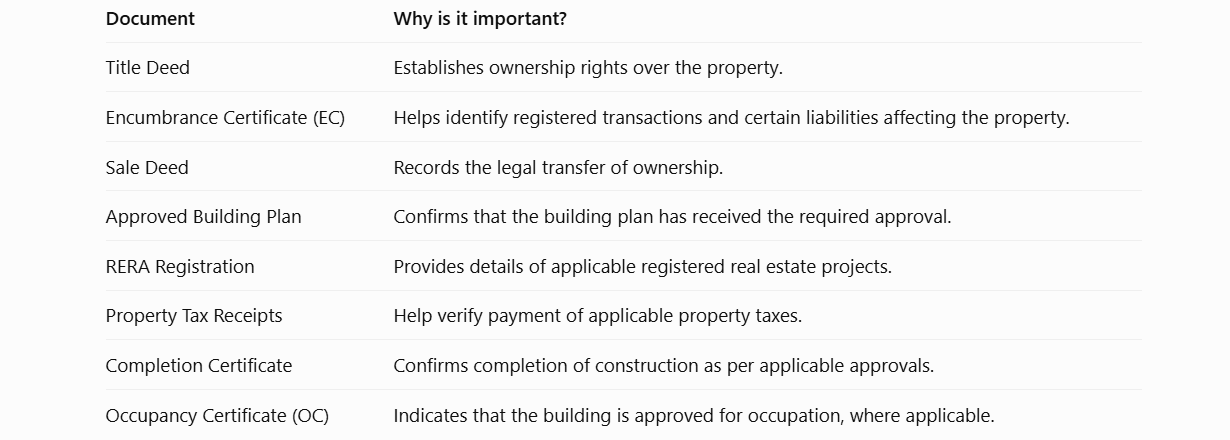
The documents required may vary depending on whether you are purchasing a new apartment, an independent house, a plot, or a resale property.
It is always advisable to consult a qualified property lawyer before finalising the purchase.
4. How much down payment is required to buy a home?
A down payment is the amount of money that a homebuyer pays from their own savings when purchasing a property. The remaining eligible amount may be financed through a home loan.
For example, consider a property worth ₹50 lakh.
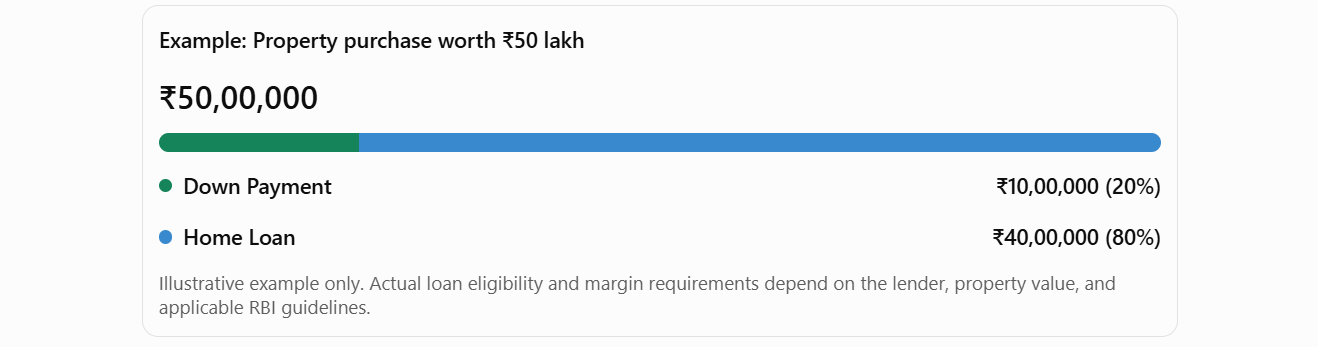
Apart from the down payment, buyers should also keep additional funds for:
- Stamp duty and registration charges.
- Legal verification fees.
- Loan processing fees.
- Interior and furnishing expenses.
- Maintenance deposits and other applicable charges.
It is better to plan your finances before searching for a property.
5. How can I get a home loan, and what are the eligibility criteria?
A home loan is a financial facility provided by banks and housing finance companies to help people purchase, construct, or renovate a property.
Most banks consider the following factors when evaluating a home loan application:
- Monthly Income: Your salary or business income.
- Employment Stability: Your employment history or business stability.
- Credit Score: Your credit history and repayment behaviour.
- Existing Loans: Your current EMIs and other financial commitments.
- Age: Your age and expected loan repayment period.
- Property Documents: Legal and technical verification of the property.
How to apply for a home loan?
- Compare home loan interest rates offered by different banks.
- Check your credit score and loan eligibility.
- Submit the required income and identity documents.
- Select a suitable loan amount and repayment tenure.
- Complete the bank's property verification process.
- Receive the loan sanction and complete the required formalities.
Before accepting a loan, carefully understand the interest rate, EMI, processing fees, prepayment conditions, and other charges.
6. What is the difference between a ready-to-move property and an under-construction property?
Homebuyers often get confused between ready-to-move and under-construction properties.
Both options have their own advantages and disadvantages.

Which one should you choose?
If you want to move into your new home immediately, a ready-to-move property may be a suitable choice.
If you are planning for the future and are comfortable waiting for construction to be completed, an under-construction property may be worth considering.
Always check the applicable approvals, tax treatment, project details, and possession commitments before making a decision.
7. What are stamp duty and property registration charges?
Stamp duty and registration charges are government charges that buyers generally need to pay when legally registering a property purchase.
Stamp Duty: This is a government tax imposed on property transactions and legal documents.
Registration Charges: These are fees paid to register the property transaction with the government registration department.
The charges may vary depending on the state, property value, property type, ownership details, and applicable rules.
For example, Tamil Nadu and Karnataka may have different stamp duty and registration rates.
Before purchasing a property, check the latest charges on the respective state's official registration department website.
Remember to include these expenses in your overall property budget.
8. How do I calculate my monthly home loan EMI?
EMI stands for Equated Monthly Instalment. It is the fixed monthly payment that a borrower makes towards repaying a home loan.
Your EMI mainly depends on three factors:
- Loan Amount.
- Interest Rate.
- Loan Repayment Tenure.
9. What is the difference between carpet area, built-up area, and super built-up area?
These are three common terms used when purchasing apartments.
Understanding these terms will help you compare properties correctly.

Carpet Area
Carpet area is the actual usable floor area inside an apartment, excluding external walls, service shafts, exclusive balcony or verandah areas, and open terrace areas. It is an important measurement defined under RERA.
Built-up Area
Built-up area generally includes the carpet area along with the area occupied by walls and other covered spaces such as balconies, as applicable.
Super Built-up Area
Super built-up area generally includes the built-up area along with a proportionate share of common areas such as corridors, staircases, lifts, and other shared facilities.
Homebuyer Tip: Always check the carpet area mentioned in the agreement and compare properties based on their actual usable space rather than relying only on the advertised square footage.
10. What should I check before taking possession of my new home?
Taking possession of your new home is an exciting moment. However, before accepting the keys, it is important to inspect the property carefully.
Here is a simple checklist:
- Check walls, flooring, doors, and windows for damage.
- Check electrical switches, sockets, and lighting.
- Test bathroom fittings, taps, and water drainage.
- Check water supply and electricity connections.
- Verify parking allocation and common facilities.
- Check the Occupancy Certificate, where applicable.
- Collect keys, warranties, manuals, and relevant documents.
- Confirm outstanding payments and maintenance charges.
- Record any defects and request the builder to rectify them.
If you identify any defects, inform the builder in writing and request necessary corrections before completing the handover process.
Keep copies of all important property documents, payment receipts, and possession-related communications safely.
Conclusion
Buying a home is an important milestone, and making the right decision requires proper planning and research.
Understanding property documents, RERA regulations, home loans, registration charges, carpet area, and possession procedures can help you become a more confident homebuyer.
Do not rush into purchasing a property simply because of attractive advertisements or limited-time offers. Take enough time to compare properties, verify documents, understand the financial commitments, and consult professionals whenever required.
Remember, buying a home is not just about finding a beautiful property. It is about finding a safe, legally verified, and financially suitable home for your future.
Disclaimer
This article is intended for general informational and educational purposes only. The information provided should not be considered legal, financial, or investment advice. Property rules, taxes, registration charges, and loan conditions may vary depending on the location and applicable regulations. Homebuyers are advised to verify all details with the relevant authorities and consult qualified legal or financial professionals before making any property-related decisions.